
Is Framer free?
Yes. Framer has a free plan, and you can build and publish a whole website on it. For my Framer review, I…
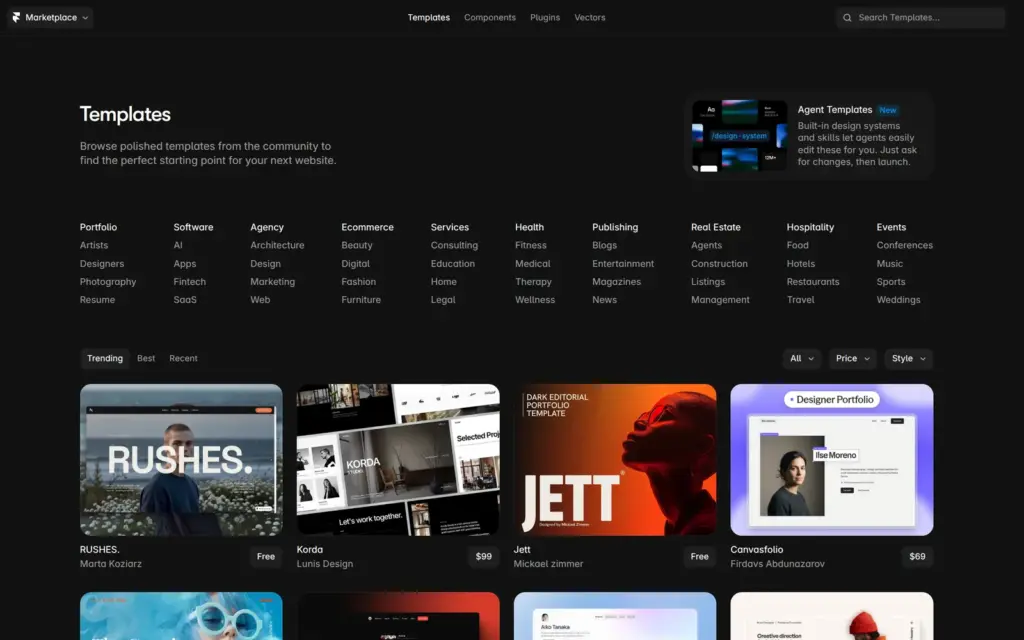
Many of them are free. Framer's templates are in its marketplace, and each one shows its price. On November 4, 2026, 57 of the first 100 templates in the marketplace's Trending list were free. You can use a free template without paying anything and publish the site on Framer's free plan. Paid templates are sold by the designers who made them. The ones I looked at cost between $2 and $149.
In my Framer review, I built a website for a made-up bakery from Morrow & Grain, one of the free templates. This time, I went back to the marketplace and looked at the prices and the licenses.
On November 4, 2026, the marketplace had more than 14,000 templates. You can browse them in ten groups with four categories each, for example Food under Hospitality or Therapy under Health.
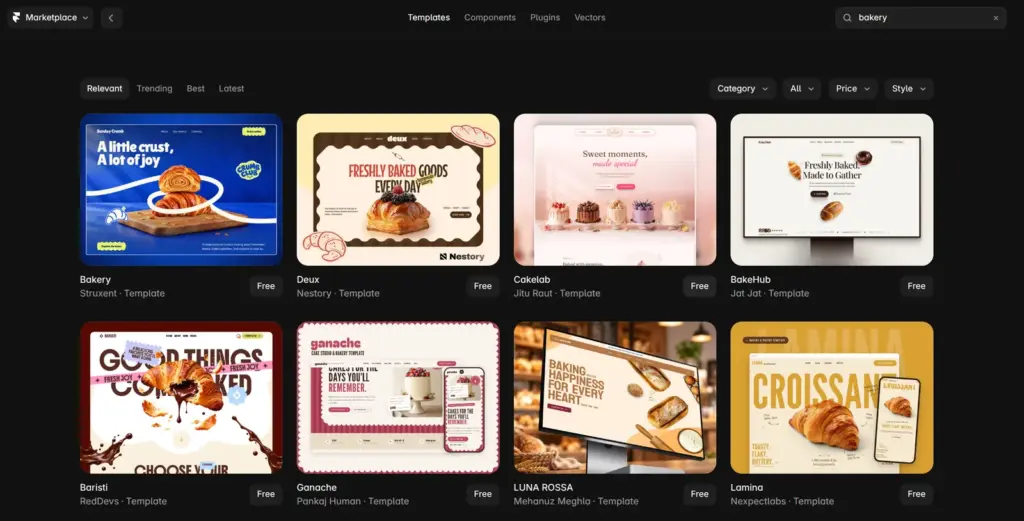
You can also search for your trade. When I searched for "bakery", the first 19 results were free, and for "dentist" the first twelve. The price filter shows only the free or only the paid templates.
Framer's help center says that designers also share templates on social media and on their own websites. I only looked at the marketplace.
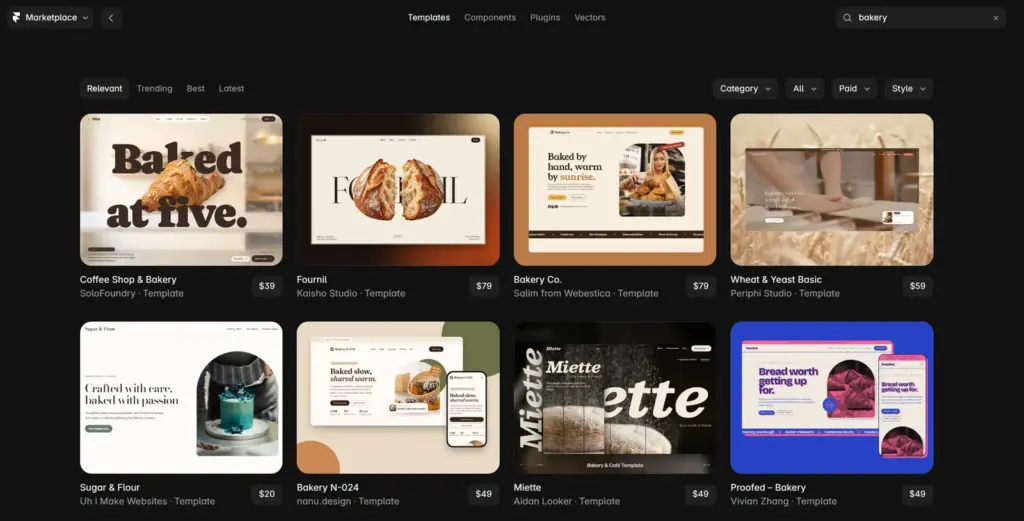
I went through the first 224 paid templates in the Trending list. Half of them cost $69 or less, and a quarter cost $100 or more.
| Price | Paid templates |
|---|---|
| Under $20 | 16 |
| $20 to $49 | 79 |
| $50 to $99 | 74 |
| $100 to $149 | 55 |
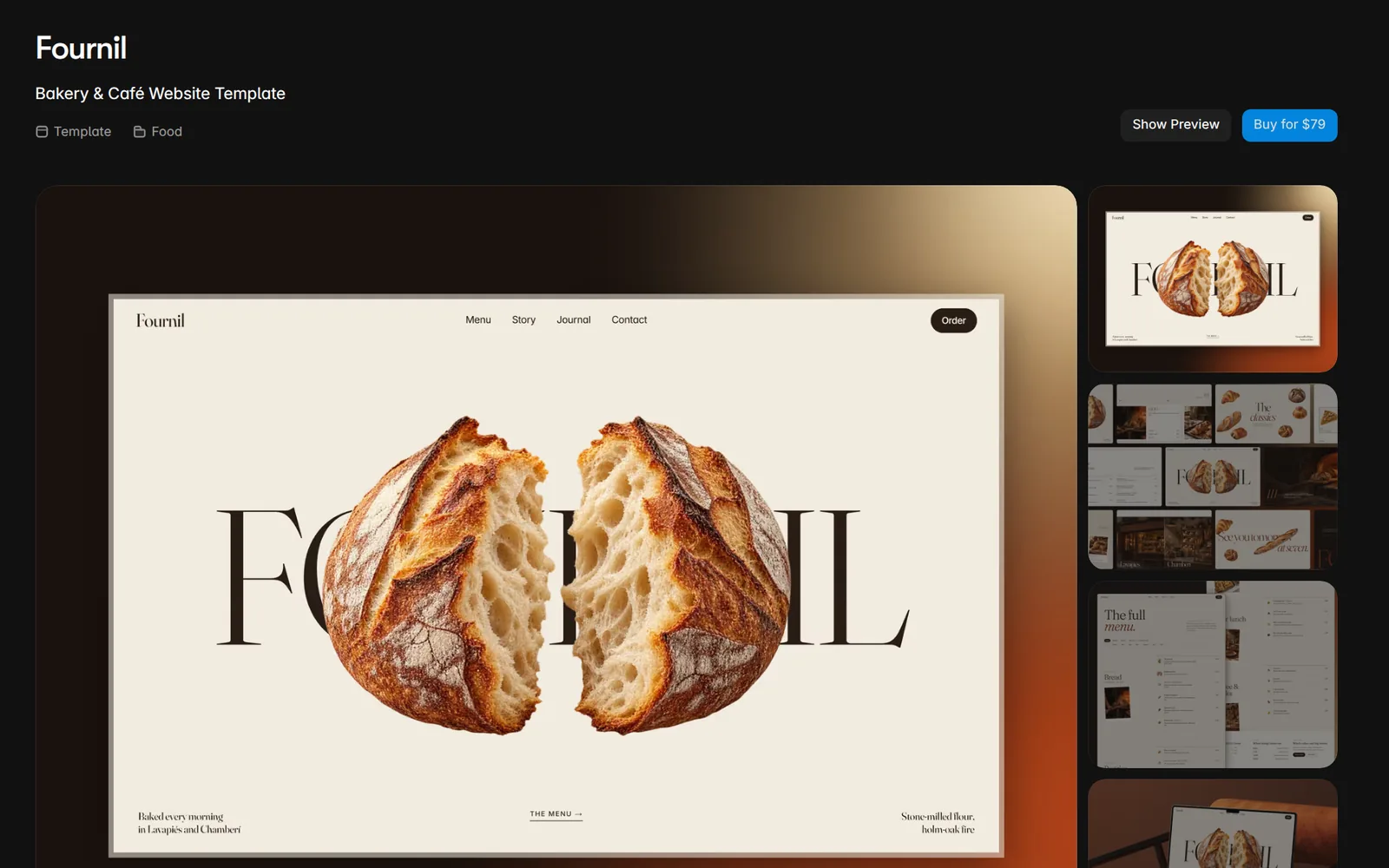
You don't buy a paid template from Framer. On Fournil, a bakery template for $79, the Buy button leads to the designer's own checkout page. According to Framer's help center, the designer then emails you a link that copies the template into your account. Framer doesn't handle the payment or refunds, so you ask the designer if something goes wrong.
Buying a template doesn't buy a Framer plan. You pay the designer for the template, and the plan for the site is a separate payment to Framer.
Free templates come with what Framer calls a limited commercial license. You can use them for your own business site and for client work. You can't sell or share the template itself.
Paid templates have a single-use license, which covers one website. Each template's page shows which license it has.
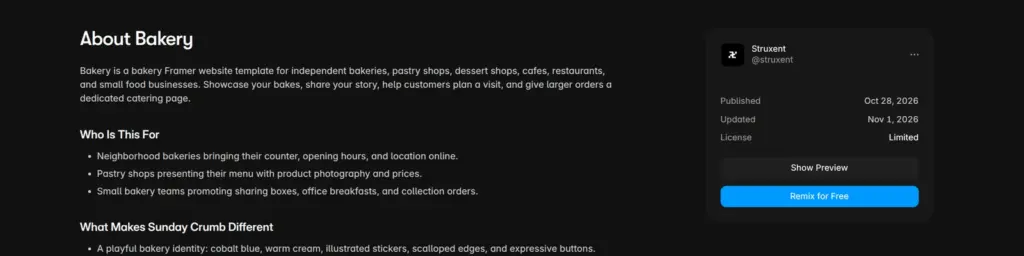
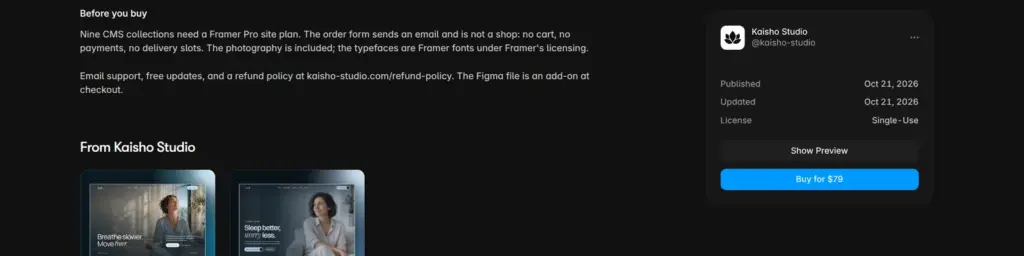
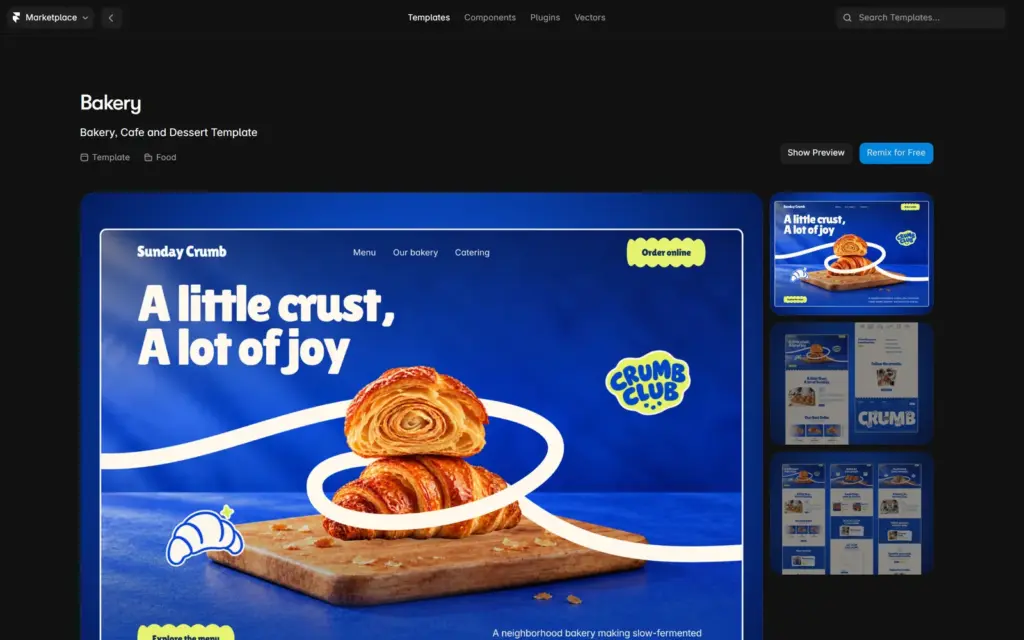
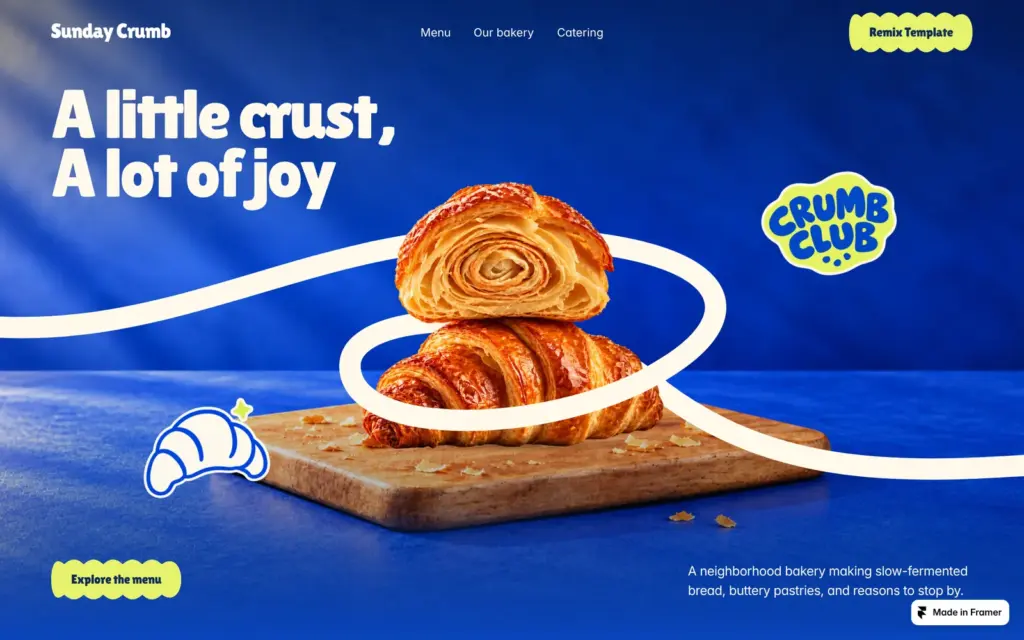
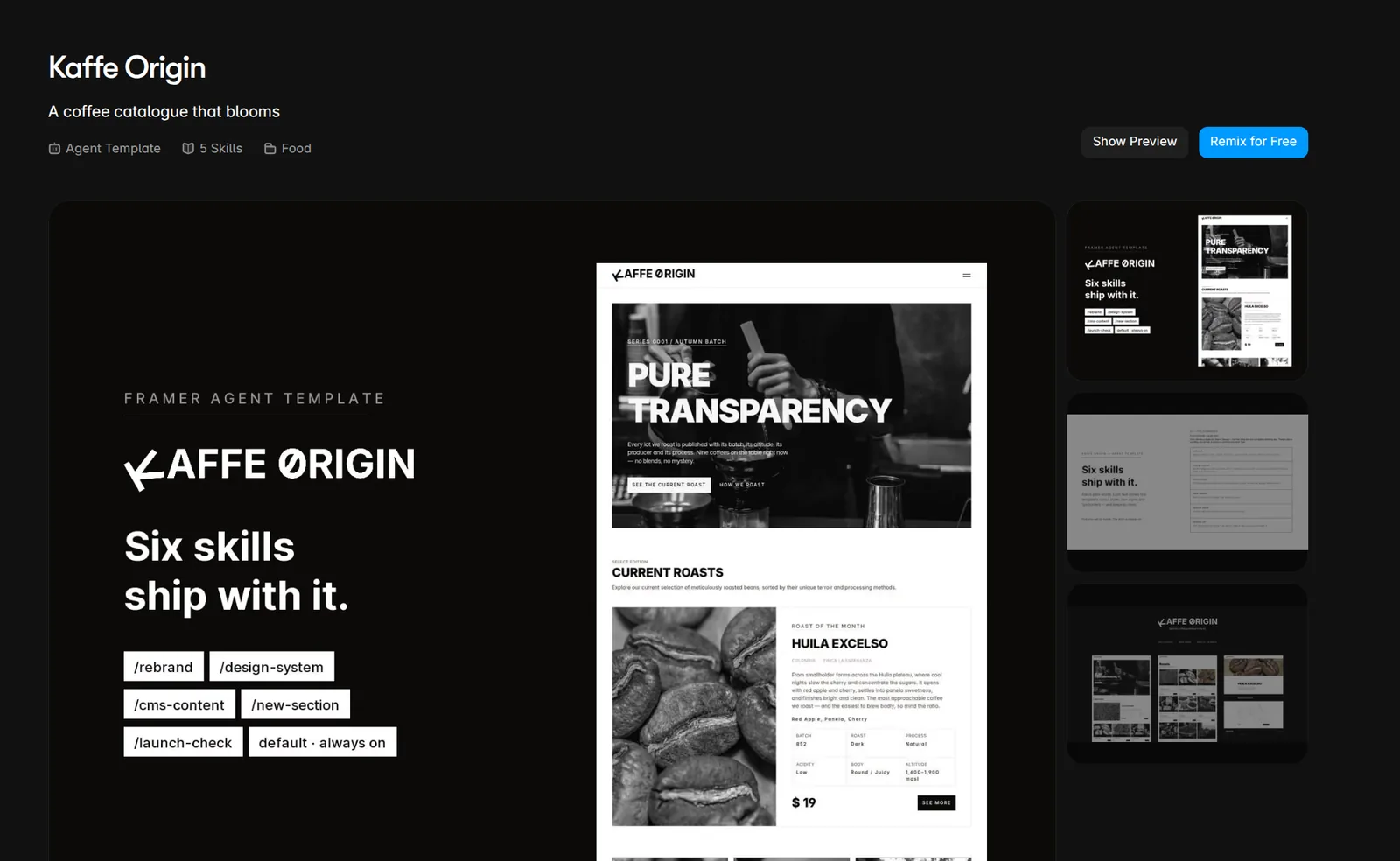
Show Preview opens the template as a website you can click through. Remix for Free copies the whole template into your account and opens it in the editor. When I did this with Morrow & Grain in my review, Framer didn't ask for any payment. The copy comes with the designer's text and photos, and you replace them with your own. I built the bakery site this way.
On the free plan, the site gets a framer.website address and a "Made in Framer" badge. Your own domain needs a paid plan. Basic, the cheapest, costs $10 or €10 a month on yearly billing. I went through the free plan when I checked whether Framer is free.
Framer's CMS stores content like blog posts or menu items in collections. The free plan allows 10 collections and Basic only 2. Pro allows 10 and costs $30 or €30 a month on yearly billing.
Fournil has nine collections, and its page says they need the Pro plan. On the free plan they would fit, but the site would stay on a framer.website address. With your own domain, Basic is too small for it, so you'd pay for Pro. Many template pages list how many collections they use, so look for that number before you pick one.
The marketplace now also has Agent Templates. They come with skills, which are written instructions for Framer's AI agent. Kaffe Origin, a free template for a coffee roaster, has a skill called /rebrand. According to its designer, it puts your business details into the whole site. The agent uses AI credits, and free accounts get 500 to try it. I didn't test the skills.
You can't download a template. It's a Framer project and stays in Framer, and Framer has no HTML export for hosting the site somewhere else.
Each remix makes a new project. If you want another template later, you remix it and put your text and photos in again.
 What I'm building
Give Vroni a GitHub issue, bug report, spec, or rough idea. It reads the repo, plans the change, writes code, runs checks, and works toward a review-ready pull request.
Take a look at vroni.com